An editorial exploration of films where poker is not just a game but a narrative engine. Poker scenes in cinema often compress tension, reveal character, and advance plot. This category collects reviews, plot guides, character files, and scene analyses for films with significant poker content. It is part of Cinema Film Review, an independent cinema-first portal.
Why Poker Matters
Fact
Poker as Pressure Cooker
Poker scenes compress time and raise stakes, creating immediate tension. The turn of a card can reverse fortunes in seconds. Filmmakers use close-ups and silence to amplify suspense, turning a quiet table into a volatile arena where every glance carries weight.
Analysis
Character Revealed at the Table
A player's behaviour at the table exposes their psychology and moral compass. Bluffs, tells, and risk-taking reflect deeper personality traits. Poker confrontations often replace physical conflict, allowing directors to dramatise interior struggle through gesture and restraint.
Analysis
Cards as Visual Language
Cards, chips, and table geometry become visual metaphors for control and chance. Camera angles and editing rhythms mirror the game's logic. The felt table acts as a stage for face-to-face confrontation, where composition and timing carry as much meaning as dialogue.
Featured Poker Films
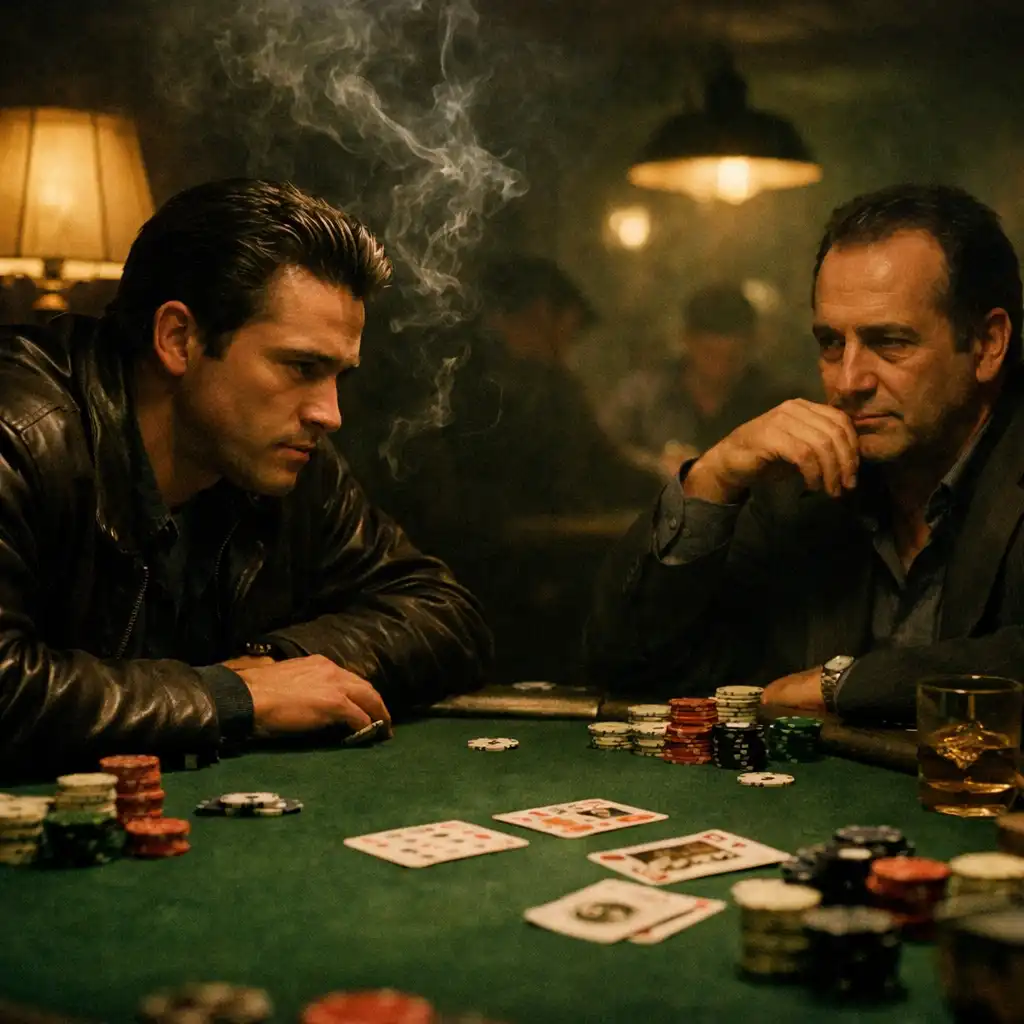
Rounders, 1998. A high-stakes table becomes a test of nerve.
FILM-01
Rounders (1998)
A law student returns to high-stakes poker to help a friend pay off debts. Directed by John Dahl, starring Matt Damon and Edward Norton. The film is known for its authentic poker terminology and tense heads-up matches.
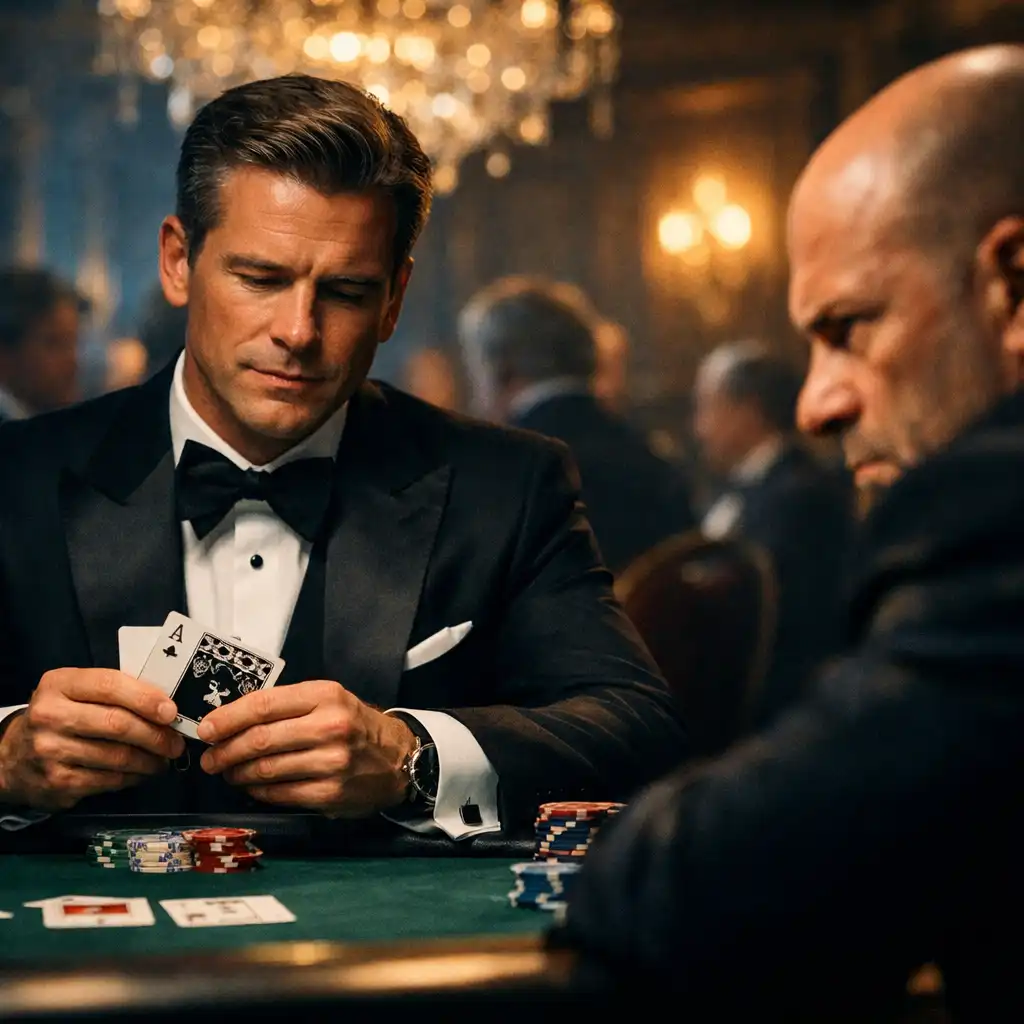
Casino Royale, 2006. A high-stakes game becomes psychological warfare.
FILM-02
Casino Royale (2006)
James Bond enters a high-stakes poker game to bankrupt a terrorist financier. Directed by Martin Campbell, starring Daniel Craig. The poker game at Casino Royale is a central set piece with intense psychological warfare.
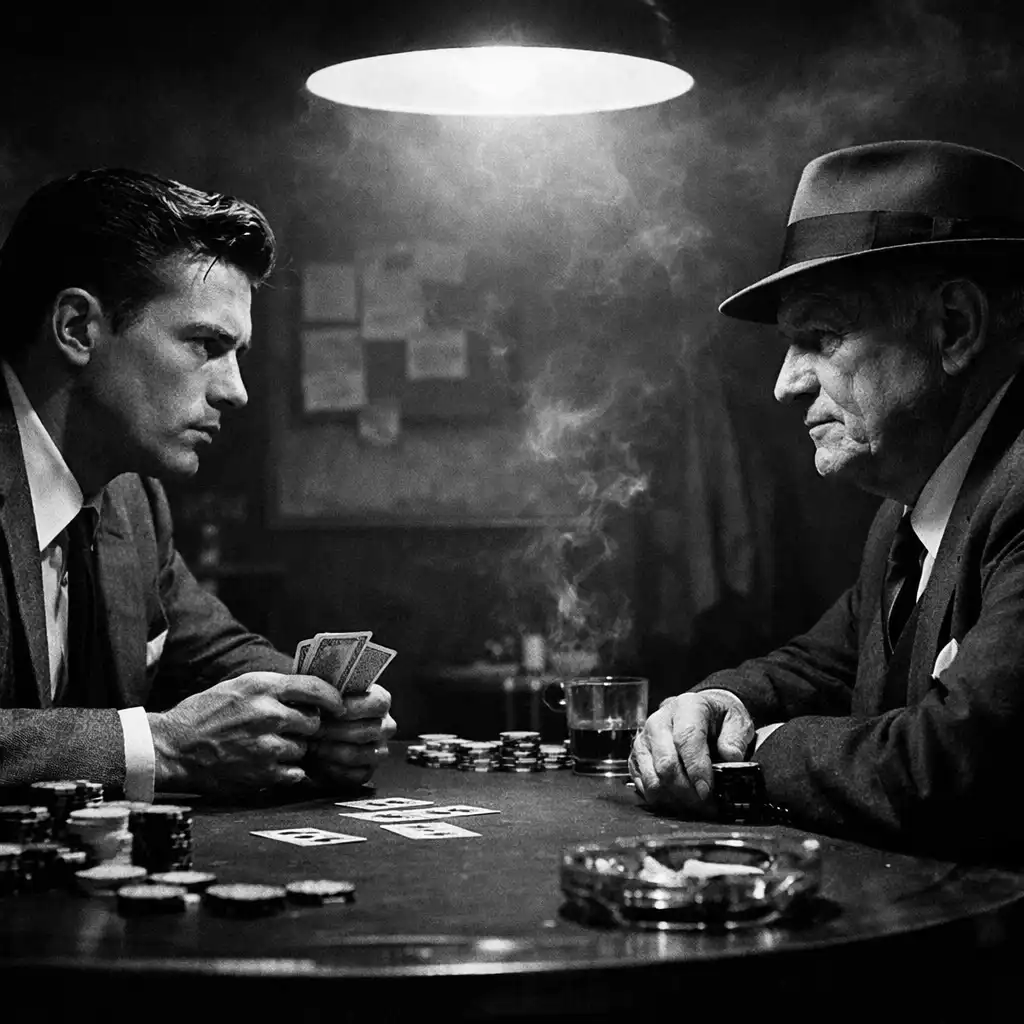
The Cincinnati Kid, 1965. A marathon game becomes a study of obsession.
FILM-03
The Cincinnati Kid (1965)
A young poker player challenges the reigning champion in a marathon game. Directed by Norman Jewison, starring Steve McQueen. The film is a classic study of obsession and skill in the world of professional poker.
Poker often serves as the inciting incident or turning point that propels the protagonist into conflict. A crucial hand can change a character's fortune and set the story in motion. The outcome of a game can create debts, alliances, or rivalries that shape every subsequent choice.
Analysis
Stakes Beyond Money
In many films, the poker table represents a battle for identity, respect, or survival. Characters risk more than chips; they risk their reputations and relationships. The psychological stakes often outweigh the financial ones, making the game a mirror for the characters' deepest fears.
Character Studies at the Table
CHAR-01
Mike McDermott
Rounders (1998) · Played by Matt Damon
A talented player torn between his law studies and his passion for poker. His decisions at the table reflect his internal conflict between responsibility and risk.
CHAR-02
James Bond
Casino Royale (2006) · Played by Daniel Craig
A secret agent whose poker skills are as sharp as his instincts. His cool demeanour at the table masks his emotional vulnerabilities.
CHAR-03
Eric 'The Kid' Stoner
The Cincinnati Kid (1965) · Played by Steve McQueen
A young poker prodigy whose ambition leads him into a high-stakes duel. His journey is a study in obsession and the cost of winning.
Key Poker Scenes
SCENE-01
The Final Hand in Rounders
Fact
Film: Rounders (1998). Scene: Final poker hand between Mike and Teddy KGB.
Analysis
Mike faces off against Teddy KGB in a climactic heads-up match. The scene uses tight close-ups and deliberate pacing to build tension. The outcome hinges on reading an opponent's tell, a key theme of the film.
SCENE-02
The Poker Game in Casino Royale
Fact
Film: Casino Royale (2006). Scene: Texas hold'em game at Casino Royale.
Analysis
Bond plays a high-stakes game against Le Chiffre, with millions at stake. The scene is a masterclass in sustained tension, using silence and glances. Poker becomes a metaphor for the larger spy conflict.
Editorial Perspective
Analysis
Poker remains a potent cinematic device because it externalises internal conflict. The game's rules provide a clear structure for dramatic tension. Poker scenes allow filmmakers to explore themes of chance, skill, and deception without resorting to spectacle.
— Cinema Film Review editorial note
Explore Further
Read Reviews
Dive into detailed reviews of poker films, separating fact from analysis.
Cinema Film Review is an independent, cinema-first portal. We do not provide gambling services, betting offers, or casino promotion. All content is for informational and educational purposes only. We separate verified film facts from editorial interpretation.
We use cookies to improve your experience and analyse site traffic. By clicking “Accept” you consent to our use of cookies. You can reject non-essential cookies.